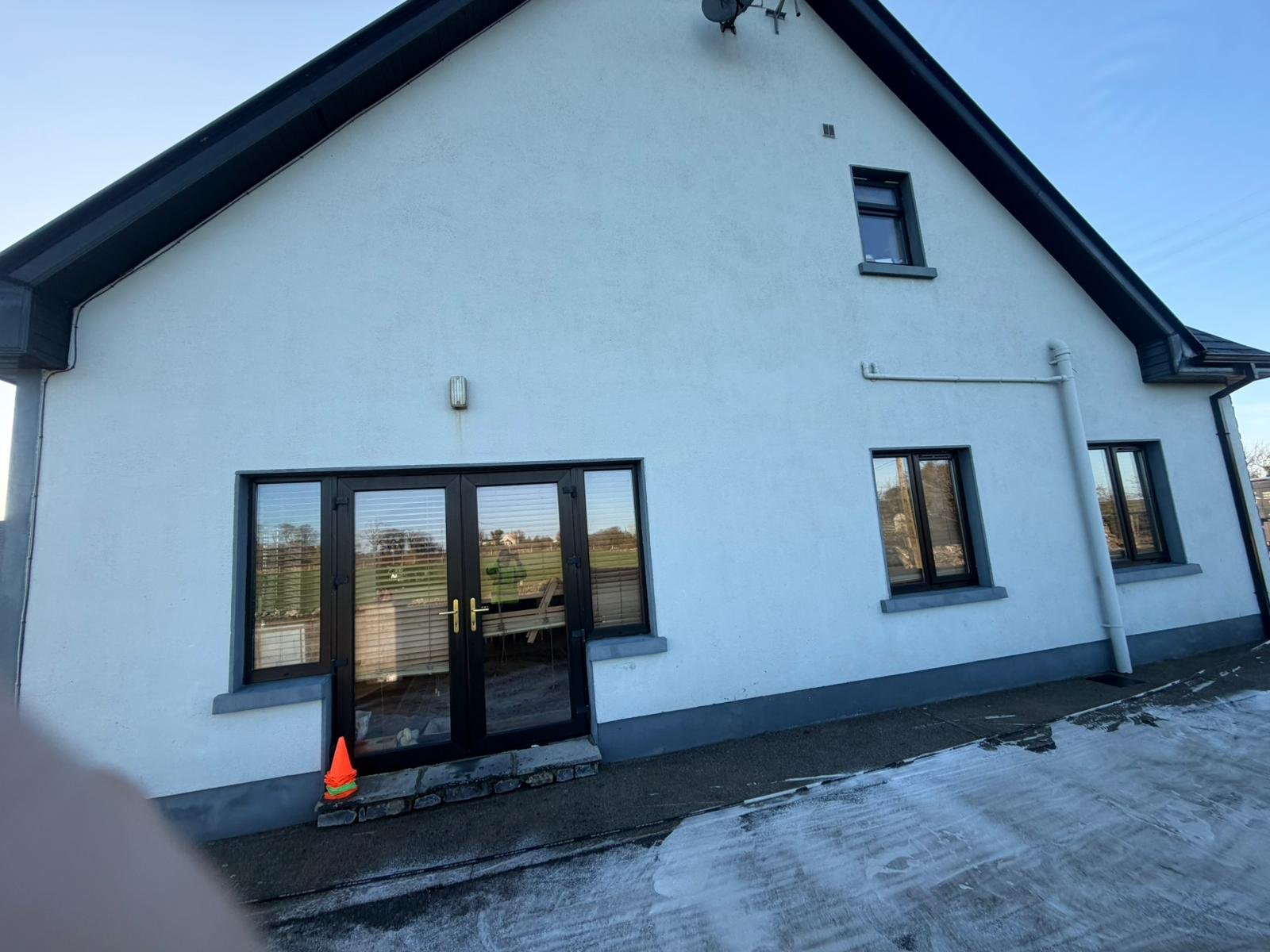
Are you looking for soft washing in Galway that homeowners and businesses can use without subjecting exterior surfaces to aggressive pressure? Soft washing can suit many properties where algae, moss, lichen or weather staining has built up, provided the method matches the material and condition. It combines a suitable cleaning solution, controlled application and a low-pressure rinse, rather than treating every surface as if it were the same.
That distinction matters in Galway, where shaded elevations, wet weather and older buildings can leave render, roofs, paving and façades looking tired. The seven uses below explain where soft washing can fit, what needs checking first and where another repair or cleaning method may be more suitable. For a wider view of roofs, gutters, walls and paving, see our complete guide to exterior cleaning for Galway properties.
Why soft washing suits many Galway exterior surfaces
Algae, moss, lichen, traffic film and weather staining can make a well-maintained property look neglected. Excessive pressure can add a second problem by damaging render, mortar joints, coatings or older materials that were already weakened by age and moisture.
Soft washing uses a treatment-led process. A suitable solution is applied in a controlled way, allowed to work according to the product and surface guidance, then rinsed at low pressure. Low-pressure exterior cleaning still uses water pressure; "soft" doesn't mean that the surface receives no pressure at all. No-pressure cleaning would be a different approach, such as manual cleaning or a carefully selected dry method.
The right process starts with inspection. A competent exterior cleaning provider in Galway should identify the surface, check for cracks or loose sections, protect nearby areas and complete a discreet test patch before wider work. Chemical handling, run-off control and the final inspection belong in the job rather than being treated as optional extras.
1. Render cleaning without pressure on homes and extensions
Rendered walls are a common use for soft washing because green staining and organic deposits often sit on the surface. A controlled treatment can be more suitable than blasting the finish, but render cleaning without pressure should never imply that every render type accepts the same product or process.
Start by identifying the finish. K Rend, mineral render, painted render and other coated systems have different care requirements. K Rend's aftercare information includes guidance and products for maintaining rendered façades and repairing minor defects, while PRB's mineral render maintenance guidance should be consulted for compatible care practices and cautions. See the K Rend aftercare guidance and PRB mineral render maintenance guidance before choosing a treatment.
Inspect cracks, hollow areas, weak edges and previous repairs. Protect windows, vents, doors and adjoining surfaces. Then test a small, discreet section and check for colour change, texture change or coating failure before proceeding. Rinse according to the manufacturer's guidance, not according to a generic setting used on another property.
For example, a semi-detached Galway home with green staining on its north-facing gable should receive a condition check, test clean, controlled treatment and final inspection. A blanket high-pressure wash would skip the information needed to choose the method safely.
2. Roof cleaning where moss and lichen have taken hold
Moss and lichen can collect along shaded roof slopes, particularly where nearby trees reduce drying. Roof cleaning in Galway may include soft washing on compatible coverings because the treatment can address organic growth without relying on force to strip the roof clean.
Roof work needs a careful boundary. Check the age and type of the covering, existing damage, access, nearby planting and run-off route before treatment. Clay tiles, concrete tiles, slate and membranes do not respond identically, so manufacturer guidance for the specific covering takes priority. Soft washing isn't suitable for every roof.
Broken or slipped tiles should be reported or repaired before cleaning. The operator also needs to consider whether water could travel beneath laps or reach vulnerable roof details. When Galway property owners request moss removal, the work should therefore begin with a roof-cover inspection, not with equipment placed at the front door.
Consider a detached house with moss along two shaded roof slopes. The sensible sequence is to inspect the roof, record broken tiles, plan access and run-off, protect planting, then select a compatible treatment. A clean-looking roof cannot compensate for hidden damage or uncontrolled discharge.
3. Gutter faces, soffits and fascia boards with surface staining
Black streaks below a roofline often lead property owners to search for gutter cleaning services in Galway, but external appearance and drainage performance are separate issues. Soft washing may clean algae and grime from gutter faces, fascia boards and soffits. It doesn't replace removing leaves, checking joints or confirming that water flows correctly.
Before fascia cleaning, identify whether the components are painted uPVC, aluminium or another coated material. Follow the component manufacturer's instructions where available. Protect seals, joints, vents, electrical fittings and painted areas, then use a controlled rinse and visual check rather than forcing water into vulnerable details.
A two-storey property with black marks below the roofline provides a useful example. The gutters should be checked for blockage or overflow first. If water has been spilling over the same edge, washing the fascia without addressing the drainage fault will leave the appearance vulnerable to rapid re-staining.
External soffit cleaning can improve the appearance of a property, but it won't repair failed brackets, defective gutters or damaged boards. Record those issues separately so a clean surface doesn't hide a maintenance problem.
4. Driveways, paths and patios with organic growth
Algae, moss and slippery organic residue can make paths and patios unpleasant to use. Patio cleaning in Galway may include soft washing on paving, concrete or other compatible hard surfaces where treatment can loosen organic contamination without relying on aggressive pressure.
Material checks come first. Natural stone, block paving, jointing, sealed surfaces and older concrete can react differently to chemicals and water pressure. A treatment that suits one patio may discolour another, disturb jointing or affect a sealer. Product and surface-manufacturer guidance should decide what is appropriate.
Soft washing also has limits. It shouldn't be presented as a universal answer for oil, rust, paint or every type of staining. Identify the deposit before choosing a method, and use a test patch where the surface or coating is uncertain.
For example, a shaded patio beside a rendered wall may have algae on the paving and delicate planting along the edge. Before treatment, check the joint condition, protect plants and nearby drains, and plan where run-off will go. The rendered wall also needs protection so cleaning one surface doesn't create a problem on another.
5. Commercial building soft washing for façades and entrances
Commercial building soft washing requires more planning than a larger domestic clean. A customer entrance, rendered façade, canopy or sign sits beside pedestrians, doors, displays and access routes. The cleaning method must protect those features while keeping the work area controlled.
A practical site process includes:
- Identify the façade finish and check the building-material manufacturer's guidance.
- Agree access points, working areas and pedestrian controls before starting.
- Protect doors, signage, lights, vents and nearby stock or furniture.
- Plan chemical application and run-off so treatment doesn't enter unsuitable areas.
- Test a discreet section and inspect it before cleaning the full frontage.
- Check the area before pedestrians return and record the method for future maintenance.
Biocidal products used in Ireland must be notified or authorised by the Irish Competent Authority, according to the Pesticide Registration and Control Division (PRCD) biocides guidance. The guidance also explains that biocides are regulated under Regulation (EU) No. 528/2012 to manage risks to people, non-target animals and the environment. Product selection and use therefore need more care than simply choosing the strongest available chemical.
Imagine a small retail or office building with algae on a rendered frontage near its customer entrance. A survey outside the busiest period can identify the render, protect the signage and set a controlled route for run-off. The method can then be recorded so the next commercial exterior cleaning visit in Galway starts with useful site information rather than guesswork.
6. Boundary walls, garden walls and rendered outbuildings
Garden walls, rendered boundary walls, garages and sheds often sit beside hedges or fences where damp shade encourages green growth. These smaller surfaces can suit render cleaning without pressure when the finish is sound and the treatment is chosen for that specific material.
Check loose coping stones, failing mortar, cracks, painted finishes and property boundaries before applying water or a treatment. Cleaning won't repair defective pointing, damp render or unstable masonry. It can expose those defects, which is useful, but the repair remains a separate task.
A rendered garage beside a dense hedge illustrates the point. Cut back vegetation only where appropriate, inspect the wall, protect the neighbouring boundary and test a discreet patch. If the finish changes colour or texture, stop and reassess rather than continuing across the whole elevation.
PRB's mineral render maintenance guidance is a useful reference where a wall or outbuilding has a mineral render finish. The test patch should answer practical questions: does the surface keep its colour, does the coating remain sound and does the rinse leave residue or damage?
7. Older or heritage-sensitive Galway properties
Older façades need a slower assessment because historic masonry, lime-based finishes, delicate coatings and later repairs can respond badly to strong pressure or unsuitable chemicals. When Galway property owners arrange heritage building cleaning, the work should begin with understanding the building, not with assuming that a modern cleaning method will transfer to it.
The Guide to the Care of Older Buildings provides material-sensitive maintenance guidance. It is relevant when a property includes older masonry, traditional finishes or repairs that may behave differently from newer construction.
Check planning and conservation requirements before work on a protected structure or a property in an architectural conservation area. Galway City Council's heritage and architectural conservation guidance should be consulted where those considerations may apply. Where consent or specialist assessment is needed, speak to Galway City Council or a conservation professional rather than relying on a general cleaning quote.
For example, an older rendered frontage near Galway city should be photographed and documented, checked against relevant conservation guidance and tested in a discreet location. The test should confirm that gentle exterior cleaning won't remove historic fabric or alter the finish before any wider work is considered.
How to choose a soft washing method for a Galway property
The lowest-pressure option isn't automatically the right option. The method must match the material, deposit, coating and condition, and commercial building soft washing needs the same discipline as domestic work with extra controls around access and pedestrians. For a comparison of the two approaches, see soft washing vs pressure washing.
Use this checklist when comparing professional soft washing providers:
- Surface identification: the quotation names the render, roof covering, paving or façade finish where it can be established.
- Condition check: cracks, loose coatings, failed mortar, broken tiles and vulnerable fittings are recorded.
- Test patch: a discreet area is checked for colour, texture and coating changes.
- Protection plan: windows, doors, signage, vents, planting, drains and neighbouring surfaces are considered.
- Run-off control: the provider explains where water and treatment residues will go.
- Safe access: roof and upper-wall access is planned rather than improvised.
- Treatment details: products are suitable for the surface and used in line with Irish requirements.
- Written quotation and insurance: the scope, exclusions and insured status are clear.
Ask what happens if the test patch shows colour change, loose coating, failed mortar or hidden damage. A good answer is to pause, explain the finding and revise the method or scope. Commercial building soft washing should leave a usable record of the façade and treatment, not just a cleaner entrance.
What to do after soft washing to keep surfaces cleaner
Cleaning removes deposits, but it doesn't remove every source of recurring staining. Blocked gutters, overhanging vegetation, poor drainage and persistent shade can all contribute to the same problem returning.
After the work, check:
- gutters, outlets and overflow points for blockages or defects;
- plants and branches that touch or shade the walls;
- cracked render, failed joints, loose coping stones or damaged tiles;
- drainage routes and areas where water remains against the building;
- sections that need future attention, with photographs or notes for reference.
For render maintenance, follow the relevant manufacturer's aftercare guidance. K Rend provides aftercare information for keeping façades in good condition, while PRB's guidance should inform care of compatible mineral render finishes. Neither source supports a universal cleaning interval or a guaranteed algae-free period, so schedule future checks according to the property's condition and exposure.
Get a soft washing assessment for a Galway property
Soft washing in Galway should begin with the surface you need cleaned, not with a generic request to "wash everything". Ask for a property assessment that covers the material, staining, access, test patch, protection and run-off plan.
WestClean Property Care is a Tuam-based team, since 2014, providing insured exterior cleaning and free quotes for properties in Galway City and County Galway, with coverage extending to Mayo. A site assessment can establish whether soft washing suits the render, roof, gutter faces, paving, commercial façade or older building in question.
For a soft washing quote that Galway property owners can usefully compare, describe the surface and the problem when requesting the quote. That gives the cleaner a practical starting point and helps keep the proposed method tied to the condition of the property.
References
- Aftercare | K Rend
- PRB Mineral Render Finishes Maintenance Guidance
- A Guide to the Care of Older Buildings
- Heritage and Architectural Conservation | Galway City Council
- PRCD biocides guidance
Book This Service in Galway
We cover Galway City and all of County Galway. See our local pages:
Need Professional Help?
Get a free, no-obligation quote for your home or business in Galway or Mayo.