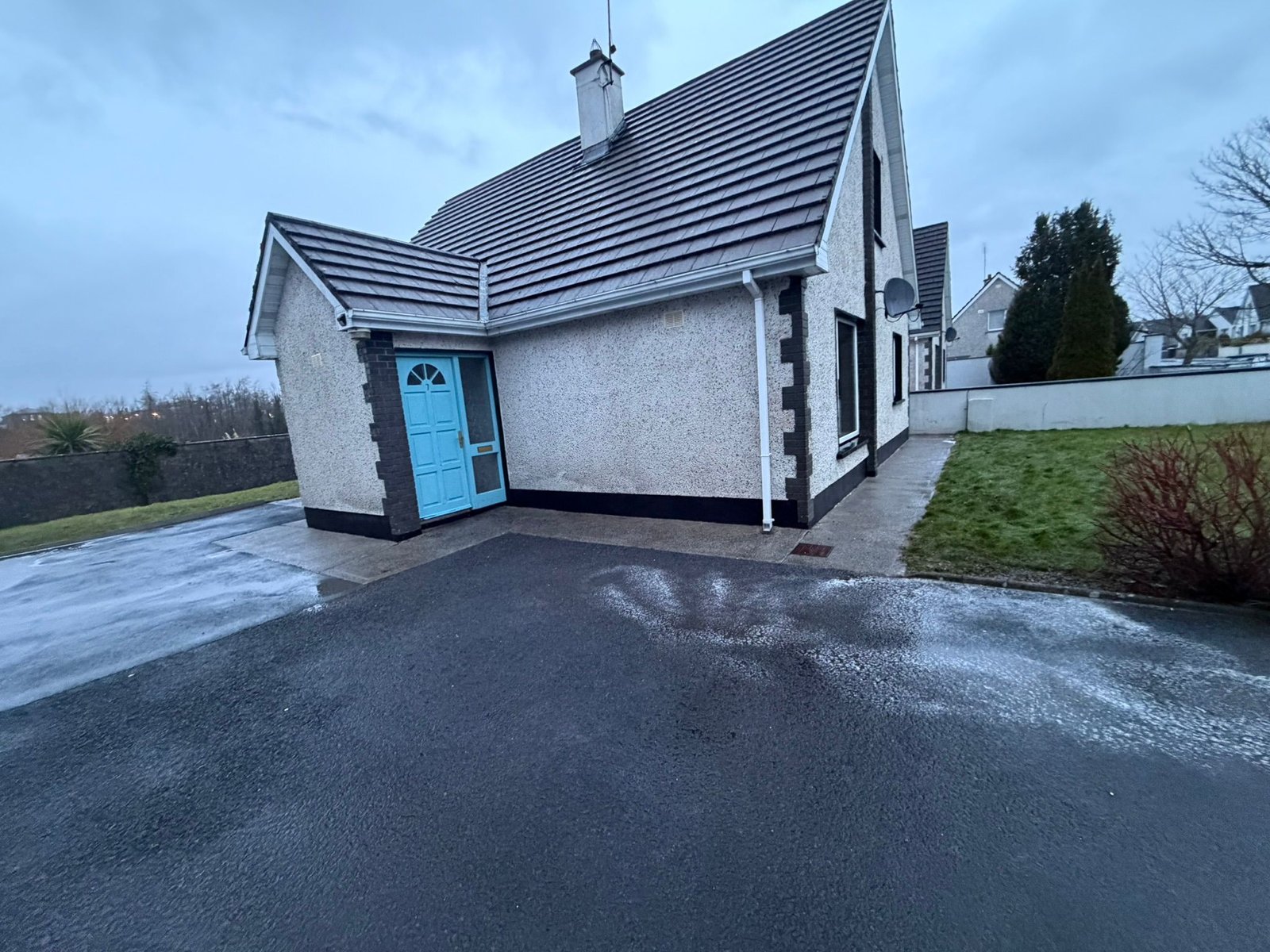
Key points
- Assess roofs, walls, gutters and paving separately before choosing equipment or treatments.
- Use the lowest effective pressure, and test an inconspicuous area before cleaning the full surface.
- Roof moss removal and gutter clearing should be inspected together because loose growth can enter the drainage system.
- Older, protected and rendered properties need a material-sensitive plan, often starting with soft washing rather than aggressive pressure.
- A commercial quote should cover access, pedestrian control, run-off, working hours, waste and exclusions.
Exterior cleaning in Galway is rarely one uniform job. A roof with moss, a shaded path with algae, a rendered wall and a block-paved entrance each respond differently to water pressure, brushing and treatment. Using the wrong method can loosen mortar, lift coatings, displace roof materials or wash debris into a blocked drain.
Start with an inspection, then match the method to the surface and its condition. This guide explains how to assess a property, plan roof moss removal in Galway, clear gutters, clean walls and restore driveways without treating maintenance as a substitute for repair.
Start with a surface-by-surface property assessment
A surface-by-surface assessment prevents the common mistake of choosing one machine setting for the whole property. Roof tiles, rendered walls, paved areas and gutters have different materials, failure points and access risks.
Walk around the building and record the condition before any equipment arrives. Look for moss, algae, lichen, ordinary dirt, rust marks, oil spots, blocked outlets, loose materials, cracked render, failed pointing and signs of water overflow. Mark areas that need elevated access rather than assuming a ladder will solve the problem.
- Roof: check visible moss, broken or slipped tiles, loose ridge materials and suspected leaks from ground level.
- Gutters: look for sagging sections, overflow marks, blocked outlets, damaged joints and downpipes that discharge beside walls.
- Walls: identify render, paint, stone, brick, timber details and cracks before selecting a treatment.
- Paving: separate algae, moss, weeds, tyre marks, oil stains and worn jointing because they need different expectations.
- Access: note slopes, fragile surfaces, overhead obstructions, public footpaths, conservatories and neighbouring property.
The Health and Safety Authority treats work where a person could be injured by a fall as work at height, including access and egress. Its guidance calls for risk assessment, planning and suitable controls, so a roof should not become a DIY experiment because the moss is visible from the driveway. See the HSA guidance on working at height.
Worked example: A Galway home has moss-covered roof tiles, overflowing gutters and a green front path. The correct assessment separates the job into three stages. First, inspect roof condition and safe access. Next, clear the gutter outlets and downpipes after accounting for loose moss. Finally, test the path surface before choosing controlled cleaning. Buying the strongest available pressure washer first would be the wrong order.
Choose the cleaning method after identifying the material, condition and access risk, never before.
Why Galway weather leaves roofs, walls and paving dirty
Damp conditions, shade, wind-blown debris and slow drying can leave exterior surfaces suitable for moss, algae and lichen growth. North-facing walls, covered entrances and areas beneath trees often stay dirty for longer because moisture and debris remain in place.
Biological growth needs a different approach from ordinary dirt. Algae may create a green film on paths or walls, while moss forms thicker growth in joints and on roof coverings. Lichen can attach firmly to masonry or tiles. Rust marks, oil spots and weathering are separate problems, and a general wash may not remove them completely.
Before booking roof moss removal in Galway, identify whether the growth is sitting on sound tiles or hiding a maintenance defect. A roof can look cleaner while still having cracked coverings, failed pointing or defective flashing. Cleaning removes surface contamination; it does not repair a roof, replace a damaged gutter or restore failed render.
The same rule applies to walls and paving. Dark damp patches may come from drainage or moisture movement rather than dirt alone. The guide to the care of older buildings supports a cautious approach to traditional materials, where moisture movement and surface compatibility need attention.
- Growth that returns quickly may point to shade, trapped moisture or a drainage issue.
- Staining around a gutter may indicate overflow rather than dirty masonry.
- Loose roof material needs a roofer's inspection before cleaning.
- Oil that has penetrated paving may improve without disappearing completely.
Choose the right cleaning method for each exterior surface
Using excessive pressure can create repair work where a slower, gentler method would have been enough. The right choice depends on the substrate, coating, age, contamination and access.
| Surface or problem | Usually suitable starting approach | Risk to check first |
|---|---|---|
| Sound hard paving | Controlled pressure washing after a test area | Etching, loose jointing and dirty run-off |
| Rendered or painted wall | Soft washing, gentle brushing and controlled rinsing | Lifted coating, water penetration and colour change |
| Older masonry | Material assessment, test patch and low-pressure cleaning | Damage to lime-based finishes or soft stone |
| Roof covering | Careful manual removal and suitable treatment where appropriate | Displaced tiles, water beneath laps and unsafe access |
| Blocked gutter | Manual removal, outlet checks and controlled flushing | Weak brackets, leaking joints and unsafe ladder use |
Pressure washing uses water force to remove contamination. Soft washing uses low pressure with a suitable treatment, dwell time and controlled rinsing, so the treatment does more of the cleaning than force does. Manual brushing and low-pressure rinsing can be better choices where a coating, mortar joint or delicate surface could fail. For a fuller comparison, see our guide to soft washing vs pressure washing.
There is no universal pressure setting that suits every Galway property. Equipment, distance, nozzle choice and pressure must match the material and its condition. Test an inconspicuous area, inspect the result after rinsing and only then proceed across the wider surface.
For soft washing exterior walls, protect windows, vents, plants, electrical fittings and neighbouring surfaces. Keep run-off under control and avoid allowing dirty water or treatment residue to travel into places where it can cause damage.
Historic or protected properties require extra care. Galway City Council provides information on heritage and architectural conservation. Check the building's status and confirm any requirements with the relevant local authority before cleaning.
The lowest effective pressure protects more surfaces than maximum force, especially where coatings, mortar or old masonry are involved.
Remove roof moss without creating a bigger problem
Roof moss removal in Galway can become a roof repair if someone blasts growth across fragile tiles. Moss can sit over defects, block drainage and conceal loose materials, so the process needs inspection before cleaning.
- Inspect the roof covering from a safe position and identify visible damage.
- Plan access, edge protection and fall prevention before anyone works at height.
- Remove loose growth carefully and collect debris rather than allowing it to enter gutters.
- Apply an appropriate treatment to remaining organic growth where the material and conditions allow it.
- Inspect the roof finish, gutters and downpipes after the work.
High-pressure blasting can damage the surface of tiles, force water beneath overlapping sections and displace ridge materials. It can also fill gutters and downpipes with the growth it removes. Roof gutter cleaning should therefore form part of the same inspection rather than an afterthought. If you are weighing up high pressure on a roof, start with is it safe to power wash a roof?
The HSA Code of Practice for Safety in Roofwork provides guidance on planning roof work, access and fall prevention. The HSA working-at-height guidance also states that work must be assessed, planned and organised by a competent person. A ladder is not automatically a safe work platform for a roof-cleaning task.
Bring in a roofing contractor when you find broken tiles, suspected leaks, loose ridge materials, unsafe access or widespread deterioration. Cleaning cannot make a failed roof watertight.
Worked example: A two-storey Galway house has thick moss near the lower roof edge. The first step is a ground-level inspection for slipped tiles and access hazards. Loose growth is then removed carefully and collected before the outlets are cleared. The roof is checked again for damage, while any broken tile or suspected leak is referred for roofing work rather than hidden beneath a cleaning treatment.
Clear gutters as part of the roof drainage system
Gutter clearing for Galway properties involves more than scooping leaves from the visible channel. A blocked outlet or downpipe can send water over the fascia, onto walls or into saturated ground beside the building.
A proper roof gutter cleaning inspection should cover:
- Gutter channels and corners.
- Outlets, hopper heads and downpipes.
- Joints, end caps and brackets.
- Discharge points and visible signs of poor drainage.
- Overflow marks, damp walls and staining beneath the gutter line.
Roof moss can wash into gutters after heavy growth loosens. Leaves and wind-blown debris create a separate blockage, while a sagging gutter may need repair rather than another clean.
Worked example: A semi-detached property has moss along the roof edge and brown overflow marks below the front gutter. The inspection starts at the outlets and downpipes, then checks whether brackets and joints remain secure. Debris is removed and contained, the downpipe is checked for obstruction, and the discharge point is inspected. If the gutter still holds water or leaks at a joint, the owner receives a repair recommendation rather than a claim that cleaning solved the drainage problem.
Because gutter work often involves height, access must be planned. The HSA guidance on working at height covers ladders, access equipment and the need to control fall risks. Keep people away from the area below the work, especially beside entrances and public paths.
Use soft washing for delicate exterior walls and rendered façades
Strong pressure can strip paint, open cracks and damage mortar on rendered or older façades. Soft washing exterior walls starts with identifying the material, testing a small patch and allowing a suitable treatment time before controlled rinsing. For more on where this method fits, see 7 best uses for soft washing on Galway properties.
Soft washing is a low-pressure approach. It relies on an appropriate cleaning treatment, dwell time and rinsing rather than trying to force every mark away with water pressure. The treatment must suit the wall, and the operator must follow the product's safe-use instructions.
Rendered walls, painted surfaces, delicate masonry, timber details and older façades need different plans. A test patch can reveal colour change, loose coating or uneven absorbency before the full wall is treated. It also sets more realistic expectations where staining has entered the material or where weathering has altered the finish.
- Protect windows, vents, doors, plants and electrical fittings.
- Cover or isolate nearby surfaces that could be marked by run-off.
- Check cracks, failed pointing and loose render before rinsing.
- Manage run-off so dirty water does not collect against walls or affect neighbouring property.
- Record the existing condition with photographs where a landlord or property manager needs a maintenance record.
Older buildings need particular restraint. Traditional masonry and lime-based finishes can behave differently from modern render, and sealed repairs may trap moisture. The older-buildings guide linked above explains why material compatibility and moisture movement should shape maintenance decisions.
A protected structure or a building in an architectural conservation area may require advice before work begins. Galway City Council's heritage information can help identify the issue, but the relevant authority or a conservation professional should confirm what applies to the property.
Restore driveways and paths without damaging the surface
Driveway pressure washing for Galway properties should begin with surface identification, because concrete, tarmac, block paving and natural stone do not tolerate the same treatment.
- Concrete: check for surface wear, old repairs and marks that may remain after cleaning.
- Tarmac: avoid treating loose or deteriorated areas as if they were sound paving.
- Block paving: protect jointing, manage weeds and allow for replacement sand where cleaning removes it.
- Natural stone: identify the stone and test for colour change, etching or surface softness.
Algae and moss often respond to controlled cleaning, while tyre marks, oil and permanent colour variation may need a more targeted approach. Cleaning cannot guarantee removal of every oil stain, and a surface that has worn or cracked may need repair, resurfacing or replacement.
Worked example: A block-paved commercial entrance has green growth, loose debris and uneven joints. The operator first clears loose material and tests a small section. Controlled cleaning follows, with dirty water kept away from pedestrian routes and drains where possible. After drying, the joints are inspected and replacement jointing material is considered where the original sand has been removed.
Keep pedestrians away from wet paving and mark changes in level. A clean path that remains slippery, unstable or poorly drained still needs further maintenance.
Plan commercial exterior cleaning around access and operations
Commercial exterior cleaning for Galway sites must fit around people, vehicles, tenants and opening hours. A shop entrance, school, hospitality premises, office, industrial unit and managed development each creates different access and control problems.
A quote based only on photographs can miss roof access restrictions, public footpaths, water and power arrangements, fragile surfaces or tenant activity. A site assessment gives the contractor enough information to plan the work and define what the price includes.
A commercial scope should state:
- Each surface to be cleaned and its current condition.
- Access equipment and roof-access arrangements.
- Pedestrian and vehicle controls.
- Proposed working hours and any tenant coordination.
- Water and power responsibilities.
- Run-off management and waste removal.
- Areas excluded from cleaning, repairs or stain treatment.
HSA working-at-height guidance calls for risk assessment and planned, organised work by a competent person. Public safety also needs attention when hoses, wet surfaces or access equipment sit beside a footpath.
Worked example: A managed property has a block-paved entrance, moss on a roof section and dark staining on a rendered wall. The quote separates roof access, gutter work, wall treatment and driveway cleaning. It also states when the entrance will be controlled, how loose jointing will be handled, how run-off will be managed and which roof repairs sit outside the cleaning scope. That level of detail is more useful than a single square-metre rate.
A commercial cleaning quote should describe site controls and exclusions as clearly as the surfaces being cleaned.
Protect older, protected and architecturally sensitive Galway properties
Aggressive cleaning can remove historic material that cannot be replaced easily. Identify the building's status and construction before choosing pressure, treatment or repair methods.
Check whether the property is a protected structure, sits within an architectural conservation area or uses traditional materials. Older masonry, lime-based finishes, delicate stone and historic roof details may react badly to high pressure, unsuitable chemicals or sealed repairs that restrict moisture movement.
Document the condition before work begins. Photograph cracks, staining, missing pointing, loose render and existing colour variation. Then test a small area and inspect the result before extending the treatment.
Soft washing exterior walls can be a safer starting point for some delicate façades, but low pressure alone does not make every treatment suitable. The material, cleaning agent, dwell time and rinsing method still need assessment.
Galway City Council's Heritage and Architectural Conservation information explains the wider context of architectural heritage. Confirm planning or conservation requirements with the relevant local authority rather than relying on a contractor's assumption.
Set a maintenance plan instead of waiting for visible damage
Waiting for overflowing gutters or slippery paths can turn a small maintenance task into a larger inspection. Check roofs, gutters, walls and paving as separate items because each collects contamination and shows failure differently.
Use a seasonal checklist, but don't apply a fixed frequency to every building. Trees, shade, exposure, surface type and the previous condition all affect how soon inspection becomes useful.
- Check roof coverings for new moss, slipped materials and visible damage.
- Check gutter channels, outlets and downpipes for debris or overflow marks.
- Inspect walls for dark damp patches, cracked render and returning growth.
- Check paths and driveways for slipperiness, loose joints and standing water.
- Record changes with dated photographs for rental or managed properties.
Arrange an earlier inspection if gutters overflow, moss returns quickly, paths become slippery, dark patches spread or downpipes appear blocked. Gutter clearing and roof moss removal in Galway often belong on the same inspection record, even when the cleaning tasks happen separately.
Choose an exterior cleaning contractor in Galway
A low headline price tells you little if the scope excludes downpipes, difficult access, run-off control or stains. Choose a contractor who can explain the method, access plan and limits before work starts.
Use this checklist when comparing quotes:
- Exact roof, gutter, wall and paving areas included.
- Proposed method for each surface.
- Access and work-at-height controls.
- Protection for windows, plants, fittings and neighbouring surfaces.
- Run-off, debris and waste handling.
- Repairs or stain removal excluded from the cleaning scope.
- Aftercare and any condition notes.
- Confirmation that the contractor is insured.
Ask how roof work is assessed, whether a test patch is used on delicate surfaces and whether the team will stop if it finds damaged materials. HSA roofwork and working-at-height guidance provide useful points for those safety questions.
For commercial exterior cleaning in Galway, ask for the access plan and pedestrian controls as well as the cleaning method. A clear roof gutter cleaning scope should state whether outlets, downpipes, joints and discharge points are included.
Arrange a property-specific exterior cleaning quote
Exterior cleaning for Galway properties may include roof cleaning, gutter clearing, power washing or soft washing, but the correct combination depends on the inspection. WestClean Property Care is a Tuam-based team that has served Galway City and County Galway since 2014, with wider coverage in Mayo. The business is insured and offers free quotes.
For a useful quote, provide the property location, surfaces involved and visible problems such as moss, overflow, algae, staining or difficult access. That information helps scope roof moss removal, gutter clearing and other exterior cleaning in Galway accurately without treating repairs as part of a cleaning promise.
Send the location, a short description of each affected surface and clear photographs where available. Ask for the proposed method, access arrangements, exclusions and run-off plan in writing before work begins.
When exterior cleaning is not the right first step
Cleaning should wait when the underlying condition could make the work unsafe or ineffective. Arrange inspection or repair first in these situations:
- The roof has broken, slipped or visibly unstable materials.
- A wall has loose render, open cracks or suspected structural movement.
- Gutters are detached, badly sagging or leaking at damaged joints.
- Paving is loose, severely cracked or failing beneath traffic.
- The property may be protected or uses historic materials that have not been assessed.
Cleaning can then follow once the surface and access risks are understood. It should remain a maintenance service, not a substitute for roofing, drainage, render or paving repairs.
Frequently Asked Questions
Exterior cleaning cost depends on the surfaces, condition, access, equipment, run-off requirements and work included, so a property-specific quote is more reliable than a general price.
Weather affects access, drying, treatment performance and surface safety, so the contractor must assess conditions on the day and choose a method that remains safe and suitable.
References
- Code of Practice for Safety in Roofwork
- Working at Height
- Heritage and Architectural Conservation
- A Guide to the Care of Older Buildings
Book This Service in Galway
We cover Galway City and all of County Galway. See our local pages:
Need Professional Help?
Get a free, no-obligation quote for your home or business in Galway or Mayo.