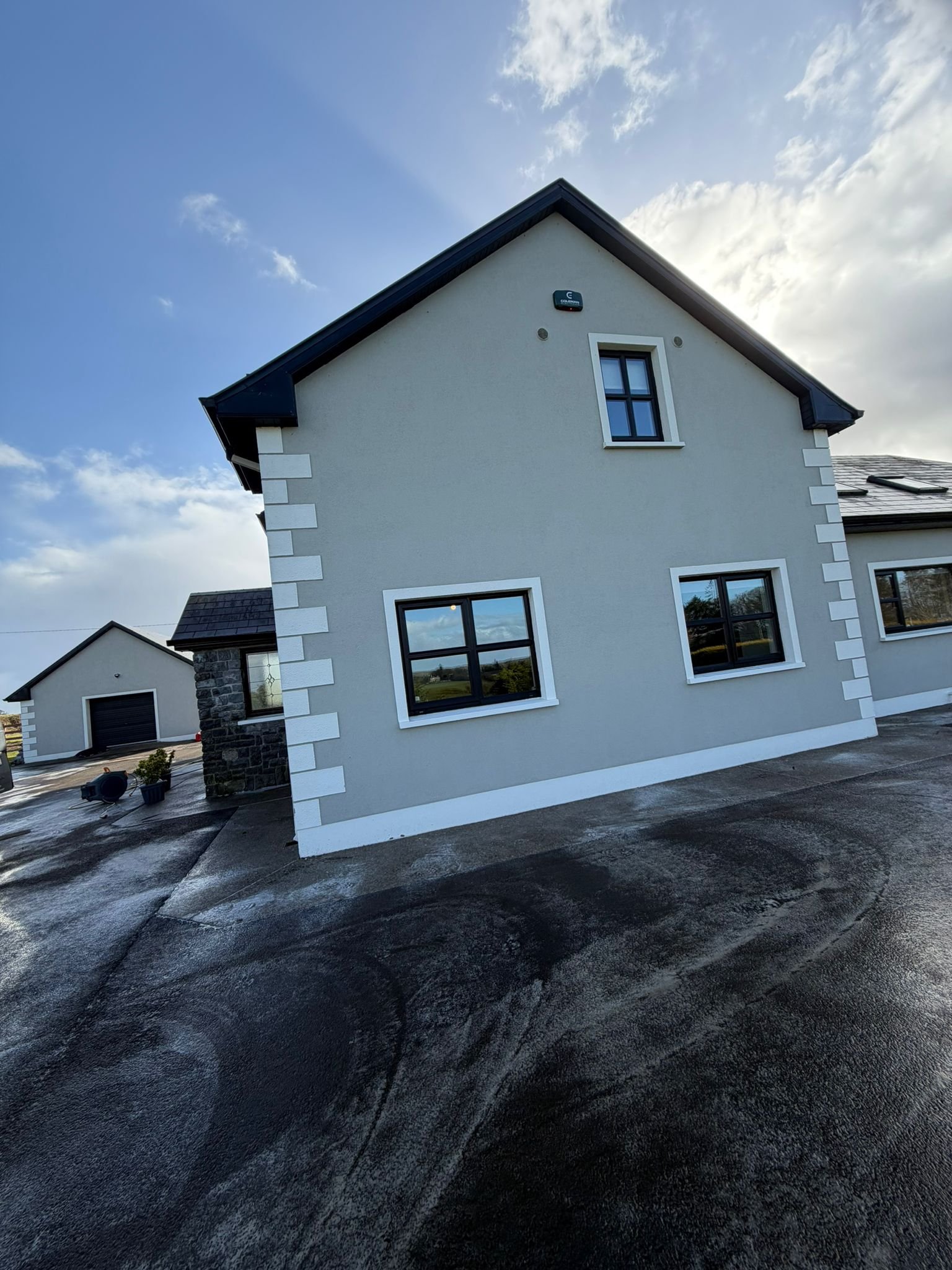
Can professional cleaning remove oil stains from a Galway driveway? Often, yes. Professional driveway cleaning in Galway can reduce or remove visible oil, diesel and similar vehicle-fluid marks, but the result depends on the stain's age, depth, size and the driveway material.
Fresh contamination on concrete usually responds differently from an old dark patch beside a frequently used parking bay. Oil can soak into porous surfaces, so pressure washing alone may move surface dirt without removing the residue below.
WestClean Property Care, based in Tuam since 2014, provides insured driveway cleaning across Galway and Mayo. Driveway cleaning starts from €80 for a 1-car driveway. An oil or tyre stain treatment is €35. Every quote is free and without obligation — request a quote and tell us the surface, the likely fluid and how old the mark is. For general upkeep, see also how often you should clean your driveway in Ireland.
Frequently Asked Questions
Professional driveway cleaning in Galway can often improve an oil-stained surface substantially, although complete removal cannot be promised without inspecting the driveway. Concrete, block paving and other absorbent materials can hold oil below the visible surface.
Hypothetical example: a fresh oil mark on a concrete parking area may respond well to suitable pre-treatment and controlled cleaning. An old stain beside a parking space, where a vehicle has leaked repeatedly, could lighten without disappearing completely.
The Roadstone paving maintenance guide provides general care guidance for paved surfaces. The sensible approach is to assess the contamination first rather than promise a finish based only on the word "pressure washing".
Driveway materials react differently to cleaning. Poured concrete can absorb oil into its surface pores. Concrete paving blocks have joints that can contain jointing sand. Natural stone may react badly to unsuitable products, while tarmac can soften or lose surface material if cleaned too aggressively.
Block paving needs particular care. The CMHA guidance on cleaning interlocking concrete pavement and protecting joint sand advises identifying and treating stains before cleaning the wider pavement. Excessive pressure around one mark can disturb jointing sand beyond the affected area.
Hypothetical example: a cleaner working on oil stains on block paving might protect nearby areas, treat the affected blocks carefully and check whether joints have loosened. A high-pressure pass over the whole spot could leave a clean patch surrounded by displaced sand.
Oil also looks different from moss, algae, general dirt and tyre marks. A cleaner should check for cracked concrete, loose blocks, failed pointing and drainage routes before washing. Green, slippery growth is a different problem — see what to do about a slippery green driveway or patio.
Professional oil stain removal is an assessment and treatment process. A typical sequence can include:
- Inspecting the driveway material, stain and surrounding surface.
- Identifying whether the contamination appears to be oil, diesel or another fluid.
- Protecting walls, doors, garage thresholds, planting and nearby surfaces.
- Applying a treatment suited to the material and contaminant.
- Agitating the area where the surface allows it.
- Rinsing or recovering wastewater with attention to drains and run-off.
- Checking the result and deciding whether further treatment is suitable.
Pre-treatment matters because a pressure washer can spread oily residue while removing only loose dirt. Treatment choice and cleaning pressure should suit the surface, its joints and its condition. No single chemical or pressure setting works safely on every driveway.
Hypothetical example: for a stained concrete parking bay, the cleaner may treat the mark first, clean the surrounding concrete to avoid a conspicuous halo and then assess whether another treatment is appropriate. The result remains conditional on how far the oil has penetrated.
DIY oil stain removal can create a pale ring around a small mark when a harsh product cleans one patch more thoroughly than the rest of the driveway. The stain might look lighter, but the surrounding surface then needs wider cleaning to restore an even appearance.
Bleach is not a general oil remover. Unsuitable solvents can damage paving, create fumes or carry contamination into joints and surface-water drains. Mixing cleaning products adds another avoidable risk.
For a fresh spill, keep people and vehicles clear, absorb the material promptly where safe and prevent it entering drains. Follow the product label and never mix products. Avoid treating a large spill, unknown fluid or delicate paving without an assessment.
Hypothetical example: a homeowner scrubs a small engine-oil mark on concrete with a strong product. The mark fades, but the scrubbed area becomes noticeably lighter than the rest of the parking bay. Wider cleaning is then needed to remove the halo.
Good information helps a cleaner judge the likely approach before work begins. Provide:
- The driveway material, such as concrete, block paving, natural stone or tarmac.
- The approximate age of the stain and the likely fluid.
- The size of the affected area and whether the vehicle still leaks.
- Clear photographs if an in-person inspection has not taken place.
Move vehicles, bins and stored items so the cleaner can reach the full affected area. Ask for checks around garage thresholds, doors, walls, planted borders, loose paving and drainage routes. Cleaning only a small square can leave an obvious edge, especially where the rest of the driveway has accumulated dirt.
Old oil stains on a driveway can remain visible when contamination has soaked deeply into porous paving, followed repeated vehicle leaks or migrated below the surface. Damaged concrete, broken blocks and failed joints also need repair rather than washing alone.
After inspection, possible next steps could include:
- A further treatment where the surface and contamination allow it.
- Replacing individual blocks with deep staining.
- Repairing damaged paving or failed joints.
- Accepting a lighter residual mark when full removal would risk surface damage.
Hypothetical example: a dark stain beside a frequently used parking bay has built up over several months. A careful cleaning process improves the appearance, but a faint mark remains because the oil has penetrated the paving. That is a cleaning result, not a promise to restore damaged material.
Get a driveway cleaning quote in Galway
For professional help to remove oil stains from a driveway in Galway, request a free quote from WestClean Property Care and provide the likely fluid, stain age, surface type and affected area before work is scheduled. Driveway cleaning starts from €80 for a 1-car driveway, with an oil or tyre stain treatment at €35.
References
- General Information - Maintenance (Roadstone paving maintenance guide)
- Cleaning, Sealing and Joint Sand Stabilization of Interlocking Concrete Pavement (CMHA)
Book This Service in Galway
We cover Galway City and all of County Galway. See our local pages:
Need Professional Help?
Get a free, no-obligation quote for your home or business in Galway or Mayo.