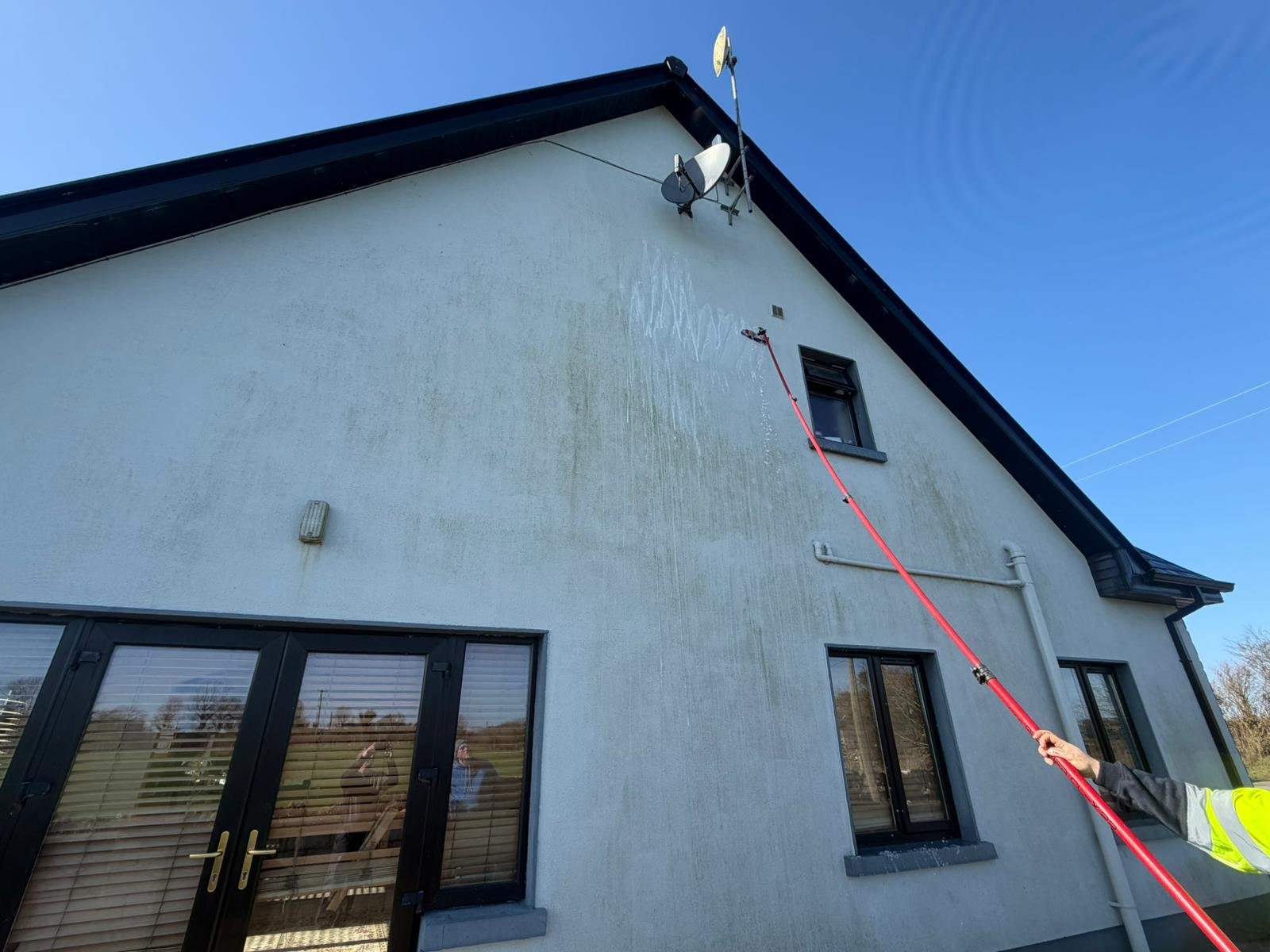
Green growth around the base of a rendered wall, black marks beneath a downpipe and dirt on a shaded elevation are familiar problems in Galway. A strong pressure washer can make the wall look cleaner for a while, but it can also strip paint, open cracks or force water behind the render. A soft wash house render Galway service uses a checked surface, a suitable labelled cleaning solution and controlled rinsing to remove contamination with less risk.
Quick answer: soft washing starts with identifying the render and its condition. The operator protects nearby surfaces, applies a compatible product according to its label and technical data sheet, allows the stated contact time, then rinses at controlled pressure. Cleaning removes surface contamination; it does not repair cracks, failed sealant or damp.
Why house render becomes dirty in Galway
Galway rain, shaded elevations, damp conditions, airborne dirt and nearby vegetation can leave algae, moss, lichen or black spotting on exterior render. Growth often appears first where a wall receives little sun, behind a downpipe or near splashback at ground level. The PRB mineral-render maintenance guidance supports regular inspection and maintenance rather than treating every mark as the same problem.
Rust, salts, failed paint and underlying damp can create similar discolouration. Render cleaning won't correct those defects, so the cause needs checking before treatment.
Example: a shaded Galway wall has green growth concentrated near the base and behind a downpipe. An inspection would check the downpipe, splashback and render condition before selecting a cleaning method.
Render cleaning removes contamination; it cannot make cracked, damp or failing render sound again.
Check the render before any soft washing treatment
A render inspection prevents a cleaning job from damaging a surface that needed repair first. Check for loose or hollow areas, cracks, open joints, flaking paint, exposed substrate, failed sealant and sections weakened by water.
Render type also affects the decision. Painted render, mineral render and monocouche finishes should not receive identical treatment. Manufacturer care instructions take priority; the Monocouche XF technical files and PRB guidance show why finish-specific care matters.
Use a small test patch in an inconspicuous area. Check the stated contact time, colour change and whether the surface sheds material. A test patch gives useful evidence, but it cannot guarantee that every part of the wall will respond identically.
Example: a painted wall with a sound coating may suit careful painted render cleaning after testing. A monocouche wall with open cracks or powdering should be assessed for repair before soft washing painted render.
How soft washing cleans house render step by step
The soft washing process controls the risks around the wall as well as the wall itself. The usual sequence is:
- Protect doors, windows, plants and nearby surfaces.
- Remove loose debris without scouring the finish.
- Apply a suitable low-pressure cleaning solution.
- Allow the contact time stated on the product label.
- Rinse with controlled pressure and inspect the surface.
The solution does much of the cleaning work; the rinse removes loosened growth and dirt. There is no universal mix, pressure setting or dwell time for every render. Follow the product label and technical data sheet, such as the Floorseal Render Cleaner Softwash Solution technical data sheet. Use suitable protective equipment and control runoff so contaminated water does not enter drains or watercourses. Irish guidance from the Department of Agriculture, Food and the Marine also supports responsible, label-led use of biocidal products.
Example: an operator treats one gable elevation in manageable sections. That helps prevent the solution drying on the wall or running across untreated areas.
Why low-pressure cleaning is preferred for many rendered walls
High pressure can mark a coating, drive water through cracks, remove friable material or strip paint. The SoftWash UK guide to cleaning render without damage recommends identifying the render, protecting sensitive areas, applying the correct solution and rinsing with controlled low pressure.
Low pressure does not mean weak cleaning. The product, contact time and rinse method must suit the finish and the contamination. Stronger mechanical action might be suitable for heavy deposits on sound render, but inspection should decide that rather than guesswork.
Example: a sound painted wall can be considered for soft washing painted render after a test patch. A loose, powdering wall should be repaired before cleaning, because lower pressure cannot make a weak surface safe.
Low pressure reduces surface stress, but safe cleaning still depends on product choice, preparation and runoff control.
How to protect windows, paving and planting during the clean
Nearby materials can suffer when preparation and runoff control receive too little attention. Protect or wet down vulnerable surfaces as the product instructions direct, and keep solution away from electrical fittings, vents and untreated materials.
Keep people and pets away from the work area until the wall and surrounding surfaces are safe. Use only products approved and labelled for the intended use, following the label, safety data sheet and local environmental requirements.
Example: before treating a gable above a patio and planted border, the operator plans protection, checks where rinse water will travel and prevents the solution reaching the planting.
What happens after soft washing and when repairs come first
A clean-looking wall still needs a post-clean inspection. Some biological staining can fade further after treatment, while established marks may require a repeat treatment permitted by the product instructions. No responsible cleaner should promise a fixed period before regrowth or a particular final colour.
Persistent damp, leaking gutters, defective downpipes and overhanging vegetation can bring staining back. A simple render maintenance check should cover:
- Gutters, downpipes and splashback near the wall.
- Vegetation touching or shading the render.
- New cracks, failed sealant or early regrowth.
Example: cleaning reveals a cracked joint below a leaking gutter. The next step is repair, suitable curing time and any required recoat, not another immediate wash.
When to book professional render cleaning in Galway
Professional assessment makes sense where access, finish condition or runoff creates extra risk. Consider it for:
- Multi-storey walls or difficult access.
- Unknown render type or a fragile coating.
- Widespread growth, nearby planting or sensitive paving.
- Runoff that needs careful control.
WestClean Property Care is a Tuam-based insured team serving Galway City and County Galway, with free quotes for exterior-cleaning work. When requesting a quote for soft wash house render Galway, include the property location, render type if known, affected elevations, access restrictions and clear photographs.
Example: photographs showing the shaded elevation, downpipe, patio and planting give the team useful context before an inspection and free quote.
Request a free quote with photographs and details about access and the affected render so the cleaning or repair decision starts with the right information.
References
- Hardware Retailer BPR Guidance
- How to Clean Render Without Damage: Softwash Guide
- Floorseal Render Cleaner Softwash Solution Technical Data Sheet
- Monocouche XF Technical Files
- PRB MIN Mineral Render Finishes Maintenance Guidance
Book This Service in Galway
We cover Galway City and all of County Galway. See our local pages:
Need Professional Help?
Get a free, no-obligation quote for your home or business in Galway or Mayo.