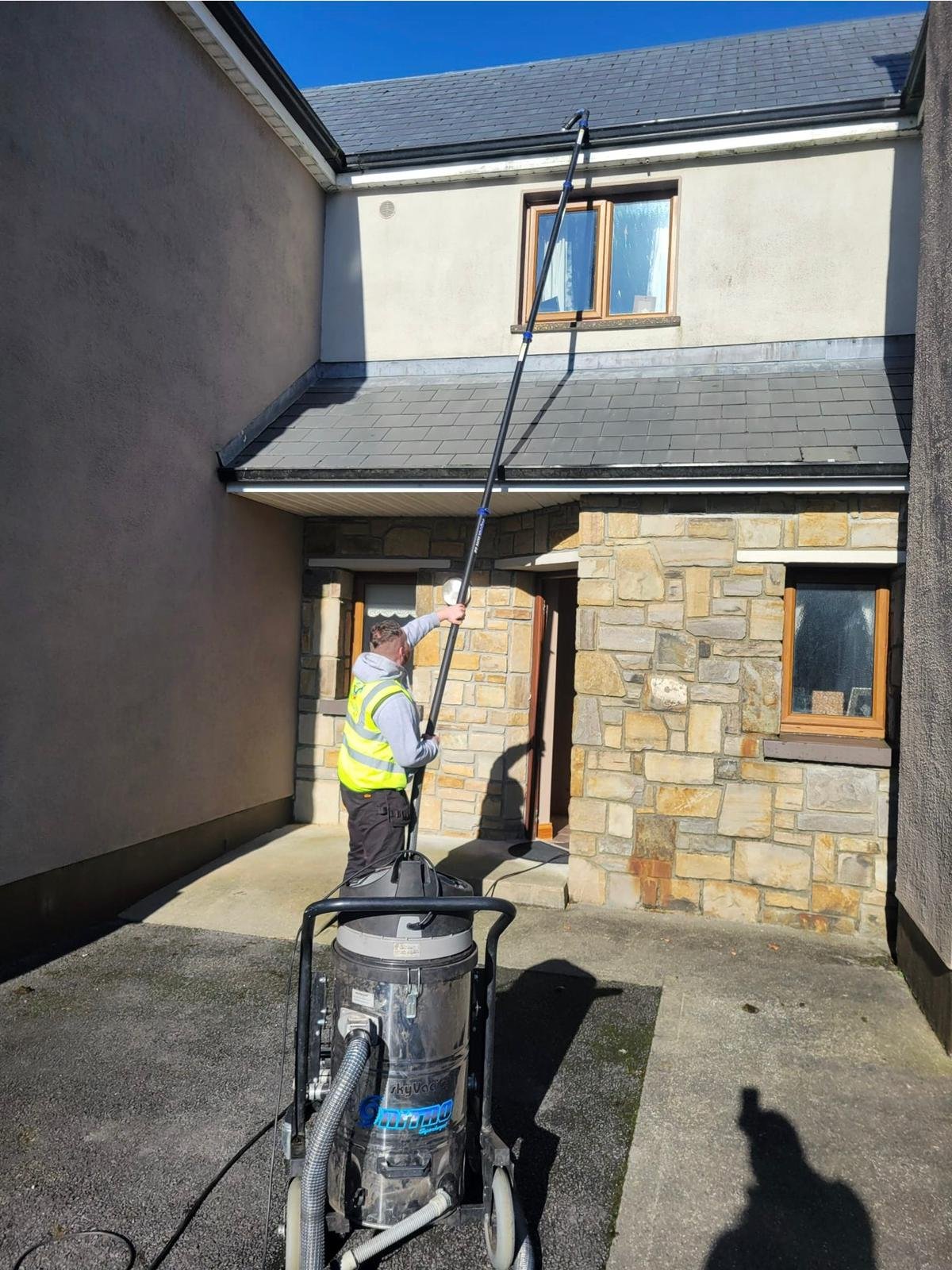
How does gutter vacuum cleaning Galway work on a typical home? A high-reach vacuum uses extension poles, a cleaning head and a ground-based vacuum unit to remove loose leaves, moss, silt and other debris from accessible gutter channels. The operator guides the head along the roofline, then checks the gutter and outlets where site conditions allow.
The method can suit homes with conservatories, rear extensions, awkward rooflines or limited ladder positions. It still needs a proper access assessment. No system suits every building or every blockage.
Why high-reach gutter vacuum cleaning suits many Galway properties
High-reach gutter cleaning in Galway can reduce the need to position a ladder beside each section of gutter. That helps where paving, glass roofs, narrow side passages or landscaping make access awkward.
Properties in Galway City and County Galway often have mixed rooflines. A semi-detached house may have a straightforward front elevation, then a rear extension that brings the gutter close to a conservatory or a sloping patio. A ground-based system gives the operator more options, provided there is enough clear space to work safely.
The equipment removes loose material rather than repairing the drainage system. A clean-looking channel does not confirm that every outlet, joint or downpipe works correctly.
Ground-based vacuum cleaning can reduce ladder positioning, but it cannot remove the need for a site and access assessment.
How a high-reach gutter vacuum system works
Understanding the equipment helps you judge whether a quoted service covers the work your property needs. A typical high-reach gutter vacuum system includes a vacuum unit, hose, lightweight extension poles and a gutter-cleaning head. An inspection camera may also be used where available. The High Reach vacuum systems guide describes this general arrangement and operating method.
The operator stands on suitable ground and feeds the pole towards the gutter. The head loosens accessible debris, while suction draws the material through the hose into a collection unit. The operator then moves along the channel in sections, watching for trapped material, damaged components or changes in the gutter profile.
How gutter vacuum cleaning works in practice depends on roof height, gutter shape, surrounding obstacles and the condition of the property. A professional may need a closer inspection or another access method if the pole cannot reach a section safely or the debris has compacted into a solid mass.
The cleaning process from inspection to final water-flow check
A sensible gutter vacuum cleaning process starts before the vacuum is switched on. The operator should inspect the roofline, identify downpipes and outlets, check ground access, remove loose debris, inspect the channel and check water flow where access and conditions permit. Rainwater drainage needs a clear route away from the building; Technical Guidance Document H provides the government guidance context for drainage and waste-water disposal.
The first inspection can reveal fragile guttering, heavy plant growth, damaged joints or a blocked outlet that vacuuming alone won't resolve.
Worked example: a Galway semi-detached home. The front elevation has clear driveway access, but the rear extension sits beside a conservatory and paved area. The operator checks the front first, then assesses the paving, glazing and roofline obstacles at the rear. They identify the rear downpipe, vacuum accessible leaf litter, inspect the channel and check flow if conditions allow. The final notes should separate cleaning completed from any repair or blockage advice.
| Stage | What to check |
|---|---|
| Inspection | Roofline, ground access, gutter condition and outlets |
| Vacuuming | Loose leaves, moss, silt and accessible debris |
| Drainage check | Gutter channel, outlet and downpipe flow where possible |
| Report | Damage, remaining obstructions and recommended follow-up |
Why working from the ground can reduce access risks
Gutter cleaning without ladders can reduce the number of ladder positions needed, but it doesn't make a job risk-free. Hoses, poles and falling debris still need space, and the operator must work around people, vehicles, cables and fragile surfaces.
The Health and Safety Authority work-at-height guidance calls for work to be planned, organised and carried out by a competent person, with suitable equipment selected after assessing the risks. A ladder is not automatically prohibited. The HSA ladder safety information sheet covers suitable selection, positioning and safe use.
Before starting, a professional should check:
- overhead cables and equipment clearance;
- unstable, wet or sloping ground;
- traffic, pedestrians and nearby residents;
- glass roofs, fragile surfaces and falling debris;
- where the vacuum unit, hose and collected waste will sit.
When high-reach vacuum cleaning needs a closer inspection
Vacuuming removes loose material. It cannot repair cracked gutters, failed joints, loose brackets, rotten fascia boards or defective downpipes. Those are separate property-maintenance issues.
Compacted mud, wet plant growth or a blockage inside a downpipe may need further investigation. A property can have an apparently clear gutter and still drain slowly through a restricted outlet.
Ask the provider whether the service includes a condition report, photographs, downpipe checks and advice when repairs are found. For landlords and property managers, written notes can make follow-up work easier to arrange.
A clean gutter channel does not prove that the outlet, downpipe, bracket or joint is working correctly.
How gutter guards for Galway homes change the maintenance routine
Gutter guards can reduce the amount of leaves and larger debris entering a gutter. They don't remove the need for inspection. Fine material, moss and roof grit can sit on the guard, pass through gaps or collect around an outlet.
Worked example: mesh guards beneath mature trees. The visible gutter looks clear, but fine leaf fragments have gathered on the mesh and around the downpipe outlet. An inspection needs to check the guard surface, the space below it and the drainage path. A vacuum head may need to work around the guard design rather than simply travel through an open channel.
Before fitting gutter guards for Galway homes, ask:
- Will the guard fit the existing gutter profile?
- Can a cleaner access and inspect it later?
- How will the guard attach to the roof edge or gutter?
- Is the roof edge and existing guttering in suitable condition?
- How will outlets and downpipes be checked?
Gutter protection works best as a maintenance aid. Suitability depends on the roof, gutter profile, nearby trees and the chosen guard design, especially on exposed properties that receive heavy weather.
What to check before booking gutter vacuum cleaning in Galway
A clear quote prevents a simple cleaning job from becoming unclear when the operator reaches the rear elevation. Confirm exactly what the provider will inspect and what happens if damage or a blockage appears.
- Confirm which elevations, extensions, garages and conservatories are included.
- Ask how ground access and safety will be assessed.
- Check whether outlets and downpipes are inspected.
- Ask whether debris collection and photographs are included.
- Confirm how additional access work or repairs will be reported.
WestClean Property Care is based in Tuam and serves Galway City, County Galway and Mayo. The company provides insured exterior cleaning services and free quotes. When requesting gutter vacuum cleaning Galway, ask for a quote that confirms the elevations, access method, downpipe checks and any follow-up recommendations.
References
- High Reach vacuum systems guide
- Health and Safety Authority work-at-height guidance
- HSA ladder safety information sheet
- Technical Guidance Document H
Book This Service in Galway
We cover Galway City and all of County Galway. See our local pages:
Need Professional Help?
Get a free, no-obligation quote for your home or business in Galway or Mayo.